

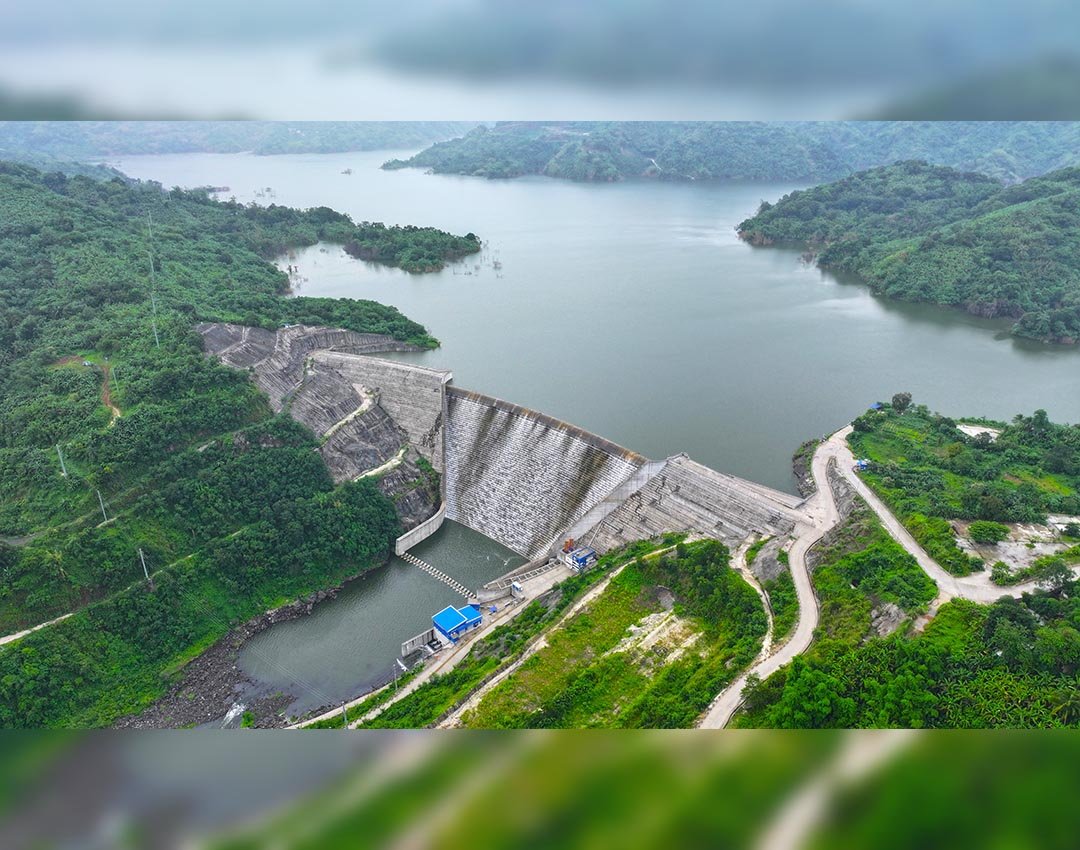
The Upper Wawa Dam, which sources water from the Boso-Boso River, a key water facility supporting Manila Water’s supply resilience.
As the country faces another El Niño episode in 2026, East Zone concessionaire Manila Water underscores its significantly strengthened capability to deliver reliable 24/7 water service across its customers, highlighting the meaningful progress made since previous periods of water stress in 2010, 2015, and 2019.
El Niño has historically brought below-normal rainfall and prolonged dry conditions across the Philippines, placing immense pressure on Metro Manila’s water supply system, which for decades depended almost entirely on the Angat Dam for more than 90 percent of its needs.
During the 2010 El Niño, Angat Dam water levels dropped to critical lows, even reaching around 157.56 meters, one of the lowest levels on record. This forced significant supply reductions across Metro Manila, with water allocations cut by as much as 30 percent, affecting millions of residents and leading to widespread service interruptions and reliance on water tankers. At the time, Manila Water’s production stood at 1,325 million liters per day (MLD), with limited flexibility to offset supply shortages during extended dry periods due to reliance to a single water source.
By 2015, while infrastructure had improved, the system remained largely dependent on Angat Dam. During the strong 2015–2016 El Niño, authorities proactively reduced water allocations to Metro Manila and implemented contingency measures to stretch available supply. The period was characterized by tight supply-demand balancing, heavy reliance on operational adjustments, and continued absence of major alternative raw water sources. Manila Water’s production at the time stood at 1,479 MLD.
The 2019 water crisis marked a turning point. Triggered by El Niño conditions and compounded by critically low levels at the Angat Dam and La Mesa Reservoir, the system’s emergency reservoir, Metro Manila experienced one of its most severe water shortages in recent history.

As the country faces another El Niño episode in 2026, East Zone concessionaire Manila Water underscores its significantly strengthened capability to deliver reliable 24/7 water service across its customers, highlighting the meaningful progress made since previous periods of water stress in 2010, 2015, and 2019, during a press conference held with Manila Water officials yesterday, July 7, 2026.
Despite Manila Water’s production of 1,465 MLD, the absence of sufficient alternative sources and supply augmentation facilities constrained the system’s ability to maintain continuous 24/7 service. This crisis highlighted the urgent need for long-term investments in water security and diversification.
With PAGASA declaring the onset of El Niño last month and forecasting to escalate into a super El Niño by late 2026 and potentially extending into early 2027, Manila Water today stands in a fundamentally stronger and more resilient position, significantly enhancing its capacity to meet demand and maintain reliable service even under prolonged drought conditions.
The most critical difference is the shift from single-source dependency to a diversified water supply portfolio. Unlike in previous El Niño events, when there were effectively no alternatives to Angat Dam, Manila Water now serves its customers through a diversified supply system, with total water production reaching 1,730 MLD. These include Angat Dam and new water sources from the central and eastern sections of Laguna Lake, which supplies raw water to two Manila Water treatment facilities: the Cardona Water Treatment Plant, with a capacity of up to 110 MLD, and the 50-MLD East Bay Water Treatment Plant Phase 1. In addition, the Tayabasan Weir supplies raw water to the 80-MLD Calawis Treatment Plant.
Among the new water sources developed, the most notable is the Upper Wawa Dam, which currently serves as a dedicated buffer supply for the East Zone concession and has the capacity to deliver up to 710 MLD. During the recent summer months, the Upper Wawa Dam has augmented supply to the Calawis WTP when the Tayabasan Weir falls below its normal operating level.
In a few months, Manila Water is also set to commission two (2) new water treatment facilities: the 220-MLD Kaysakat WTP in Antipolo City which will source water from the Upper Wawa Dam and the 200-MLD East Bay WTP Phase 2 which will also source water from the eastern flank of Laguna Lake.
Manila Water emphasizes that its current resilience is the result of sustained investments in water security, infrastructure, and operational readiness over many years. These efforts were driven by lessons learned from past El Niño events, when Metro Manila had no choice but to rely almost entirely on Angat Dam.
“With the integration of the Upper Wawa Dam and the expansion of our distribution capacity, we are now better equipped to protect our customers from severe supply disruptions even during El Niño. From a system with no alternative sources in the past, we have built a more secure and resilient water supply network designed for today’s challenges,” said Arnold Jether Mortera, Manila Water Chief Operating Officer for East Zone.
With its diversified and strengthened portfolio of water sources and expanded operational capacity, Manila Water has substantially strengthened its ability to secure reliable water supply. This positions the company to uphold its promise of uninterrupted 24/7 water service and ensure water security for its customers, even during extended periods of extreme drought.
 118
118